woensdag 10 oktober 2007

Debtors pay millions in illegal fees


Some debt administrators are profiteering from debtors' repayments by charging fees that far exceed the legal limits.

Low-income earners who are unable to keep up their debt repayments seek the help of debt administrators to reschedule their repayments to affordable levels. But a lawyer has found that most of these administrators are exploiting the people they are supposed to be helping and trapping them further in debt. Administrators are charging fees of about 23 percent to 50 percent of the amounts they collect, while they may legally take a maximum fee of 12,5 percent.

lawyer Eduan Matthee, who has been taking on debt
administrators that are over-charging, started his own debt administration company. He says debtors often do not see these liquidation accounts. Thus they have no idea where they are in the cycle of repaying their debts.

Five years ago, the Banking Council commissioned independent auditors to research 20 large debt administration companies. The Banking Council's 2002 report said at that time some 650 000 people were under debt administration, and between 100 000 and 120 000 people were being placed under administration each year.

Matthee says all he has succeeded in doing by taking to court administrators who charge more than 12,5 percent of the amounts they collect is removing a single client from that administrator. The administrator is free to continue charging its other clients more than 12,5 percent, although found unfit to be an administrator in one case, is appointed soon after as an administrator in another case, Matthee says.

I think the government should do more to help those debtors. They already have many problems and keep getting more.

Kathleen

maandag 8 oktober 2007

How to borrow from those you know and not ruin the relationship

As the mortgage market melted down this summer and the credit markets became chaotic, the stockbrokers noticed a new evolution. Although they thought that the lenders would reschedule their buyings, they just moved on. The reason of this is that the lenders had found a new way to get a mortgage. It’s not uncommon or new that people lend from their family or their friends, but often it’s associated with family problems and irresolvable arguing. The term that people use for this phenomenon is “circle lending”.

It’s not uncommon or new that people lend from their family or their friends, but often it’s associated with family problems and irresolvable arguing. The term that people use for this phenomenon is “circle lending”.

Personal I wouldn’t even consider this type of lending. Money often creates problems among people. And I don’t think it’s worth “to lose” your family over it. As a matter of fact they should forbid it. Of course you can use the argument that everything can be written down, but we all know that people count on each other. And if you propose that document, people would ask if you do not trust them. Future lenders must also look at the future, what if something happens and they can’t pay back everything, or maybe something happens with your loaners, what to do than?

Els

source:http://www.msnbc.msn.com/id/20834718/

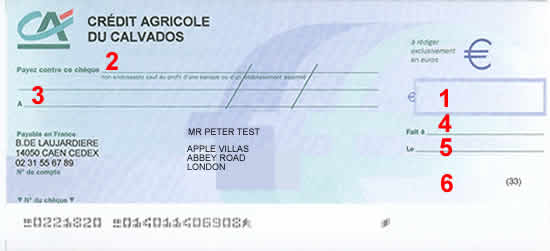
The death of the chequebook


There has been a 40% decline in cheque payments since 1990. The crucial reason for the disappearing is that it’s a far less convenient, more time-consuming method of payment. Nowadays everything is about high speed (f.i. credit cards) so the chequebook dates from the past, when commerce was less speed conscious. There’s also the notion of increased tisk of fraud compared to credit cards and other methods of payments. Cheques are also not eco-conscious and we should be moving towards no-paper methods of payment. The process of completely phasing them out will probably a slow one, the objection will likely to be around 2025.


I think that the chequebook is indeed an outdated method of payment. Nowadays there are excellent and more effective ways to pay for something. The argument for the provisional survival of the cheque is that elderly people wouldn’t be able to comprehend the modern mode of operation of f.i. credit cards and others… But I think that they have underestimated them, it isn’t as difficult to learn it as they want us to believe. I honestly believe that the cheques days are counted, and his existence will soon be over.

Laura

Source: http://www.myfinances.co.uk/associate-article/popular-stories/the-death-chequebook-$477632.htm

donderdag 4 oktober 2007

FLEMING IS VERY GENEROUS FOR THE GOOD CAUSE.

Eighty per cent of the families gives money to a good cause. The amount has increased noticeable after the tsunami of 2004. Every year collects the Flemish league against cancer more and more money because most of the people know someone in their environment with cancer. Every Non-Governmental Organization (NGO) sees his account rising but there are different ways to reach that goal:

Some non-profit organizations like Child focus, Unicef, 11.11.11, Vredeseilanden, Oxfam Solidariteit,… are making an appeal to DDF (Direct Dialogue Fundraising). It’s a concern with professional fundraisers who are specialized in professional recruitment of donaters and members of non-governmental and charitable organizations. The donater has to pay monthly a small amount (5 €) in stead of one large amount (60€).

Another way to collect money is based on single persons without direct family. If you leave your savings for example to your neighbour, he has to pay 45 till 65 per cent death duties. But you can also leave your savings to the Red Cross. This organization pays only 8,8 per cent death duties. It’s possible to agree with the Red Cross that they have to pay the death duty and further the neighbour. The difference between the death duties of the neighbour and the limited percentage of the Red Cross may the organization keep for themselves. Everybody wins except the tax authorities.

The existence of Non-Governmental Organizations is necessary because otherwise some Third World countries wouldn’t survive without our support, medication,… Everyone has the right to enjoy the common good and prosperity. The fiscal deduction for donations from 30 euro is a good initiative of the government. It’s persuading a lot of firms,… to donate money for the good cause.


Jan

Source: http://www.standaard.be/Artikel/Detail.aspx?artikelId=GS1HN9J6&kanaalid=3

dinsdag 2 oktober 2007

Do Student Loans Affect a Mortgage Application?


Will a students-loan hurt the chances of getting a mortgage? This column replies and gives answers on this problem. At first, lenders do not only look at what you owe, but also at your income. On the basis of your income they determine how much you can loan. Of course they do not only look at your repayment of the mortgage, but also at the taxes and other debts. So you won’t have too many money problems.
Another important factor: the more money you can put down, the bigger your chance will become you will get a mortgage. That’s because the lenders don’t want to take too many risks. Also important is your credit score, and in this part the student loan could be a problem, but not necessarily. And that is because a student loan is more favourably than a credit-card debt.

Owing a lot of money in instalment debt isn't going to hurt your credit score as much as maxing out your credit cards. And now we arrive at the important part of the column. “Young people get often problems, because they blow off their student loans” !!!! And that while you have more support by the government when you have a student loan than when you owe a current mortgage.

To help out the students with their loan-problems they can also do this:
-if you can’t find an income, ask your lender to spread the repayment.
-if you have an income, but it is too low, you can ask too the lender to repay the loan by proportion of your income.

It’s nice to know that there are several options to lend money or get a mortgage for young families. Often are these aids not well-known and aren’t there a lot of people who can use it. That’s I think also a problem in Belgium. The reason of this silence is to make sure that the mortgage companies and banks, won’t lose to much money.


Els


maandag 1 oktober 2007

Mortgage meltdown : vulture investors


Real estate investors find a good lure in depressed markets, they think that the markets are ready to bounce back.
Many housing markets in
Florida are looking at double-digits drops in housing prices.

Vulture investors are putting their money in this targets, they buy cheap in the hope that prices will rebound. More specific: local housing markets that have fallen far, but still have potential to recover soon.
They believe in the long-term viability of the real estate market in
Florida, but they are buying on rental economics. In former times people had purchased on condo economics, but nowadays these numbers no longer apply.
Demand for rental housing has grown, due to the mortgage meltdown mess and vulture investors react to this fact. They are looking for discounts off previous condo prices to make their purchases viable, then they convert the apartments back into rental units.

In first instance I think it’s good that they are doing something to the whole housing problem in America. Many Americans live above their standards, and this phenomenon also appears on their housing lifestyle. People look at their houses as if they were symbols of status. Nowadays home ownership has reduced and the demand for rental housing has grown, this should provide a price-safety net.
But vulture investors don’t buy houses because it’s a solution to
Americas problem. They do it for the return of it. People don’t call them “vultures” for nothing. As a fact they contribute to the matter, in short term it’s a good thing for the citizens. They receive a nice amount of money, but they don’t own a house anymore. At long term, they have to pay more and still don’t own a place of their own.
In my opinion, the government should be the first to react to the matter. The vulture investors look to areas with job growth and low unemployment, but what about the other zones, who struggle even more with debts?!?

Laura

Source: http://money.cnn.com/2007/09/24/real_estate/vultures_circling/index.htm?postversion=2007092718

Solar finally pays off

Solar panels catch enough rays to power your home and sell electricity back to the utility. Some people already have solar panels and they say that it gives them immense satisfaction, there is no easier way to make money than to sit out there and enjoy the sunshine.

Research shows that most Americans would be very interested in having a solar system, but do not realize solar can power a house economically.
Another thing most people do not realize is that the economics for solar do not depend solely on how many hours the sun shines, but whether your state offers a financial encouragement.

You can also sell power back to the utility, this makes them into power banks. If you feed more power in than you take out, you store up credits for future use.
Another benefit of solar panels is the insurance against rising energy prices.

As the price of generating conventional power has risen, the costs associated with solar power have fallen dramatically. Solar panels now cost 80% less than they did in the early 1980s.

Of course, solar power is not all about economics. There is a certain set of the population who will pay a substantial sum to do the right thing.

I think solar panels are a very good investment. You can save money with it and it helps the environment. I can imagine some people do not like the way your house will look with solar panels on your roof, but to me that is not important.

Kathleen

Source: http://www.kiplinger.com/magazine/archives/2007/10/solar2.html?kipad_id=2